
¿Cuánto cuesta al año mantener un apartamento en Nice?
Velmira Living Editorial Team · Revisado por Görkem — Founder & Head of Operations
TL;DR
En Nice, el coste anual de mantenimiento de un apartamento suele presupuestarse, en general, entre el 1,8 % y el 3,0 % del valor del inmueble. Por ejemplo, en un piso de 2 dormitorios valorado en €500.000, el total anual se mueve en muchos casos entre €5.950 y €12.000: charges de copropriété de €2.400 a €4.800, taxe foncière de €1.200 a €2.200, y si es segunda residencia, taxe d’habitation de €1.500 a €3.500 con el recargo del 60 % de Nice, además de seguro (€250-500) y cuotas fijas de suministros (€600-1.000). Si además se alquila, hay que sumar la gestión.
Introducción
Al comprar un apartamento en Nice, muchos compradores se fijan primero en el precio por metro cuadrado. Pero la pregunta de verdad es otra: ¿cuánto costará mantener esta vivienda cada año? En Francia, los gastos recurrentes tras la compra son bastante previsibles, pero el tipo de edificio, la zona, el uso previsto y si se trata de residencia principal o secundaria pueden cambiar de forma importante el presupuesto total.
Para compradores estadounidenses y turcos, una de las ventajas de Nice es que ofrece menos sorpresas que Miami y un marco más institucional que Estambul. El reglamento de la copropriété, las decisiones de la junta anual, los cargos trimestrales, la reserva obligatoria para mantenimiento y los impuestos municipales se pueden revisar por adelantado. A fecha de 2026, mientras los tipos hipotecarios en Francia para plazos de 20 años se mueven aproximadamente entre el 3 % medio y el 4 % bajo, en el flujo de caja siguen pesando sobre todo los gastos de comunidad, el impuesto inmobiliario y el modelo de uso del inmueble.
Partidas del coste anual: ¿por qué se paga en Nice?
En Francia, el coste de ser propietario de un apartamento se apoya en cinco grandes partidas: charges de copropriété, taxe foncière, en algunos casos taxe d’habitation, seguro del hogar y la parte fija de contadores y suscripciones. Si el apartamento se alquila, también hay que añadir la gestión. Por eso, limitarse a preguntar “¿cuánto es la comunidad?” se queda corto.
Las charges de copropriété son los gastos comunes del edificio. Aquí entran el mantenimiento del ascensor, el salario del conserje o gardien, la parte de zonas comunes del seguro del edificio, la limpieza, la electricidad común, jardín, piscina, puerta de seguridad, interfono, contratos de mantenimiento técnico y los honorarios del syndic, es decir, la administración profesional de la finca. En Nice, en edificios antiguos pequeños y sin ascensor, la cifra suele ser razonable; en cambio, en residencias con ascensor, conserje y vistas al mar en Carré d’Or, Cimiez o Mont Boron, sube con rapidez.
¿Por qué los edificios Belle Époque suelen costar más? Porque, aunque son muy atractivos estéticamente, sus techos altos, huecos de escalera amplios, instalaciones comunes antiguas, mayor superficie de fachada y ascensores añadidos a posteriori o de uso intensivo encarecen el mantenimiento. La piedra de fachada, los vestíbulos, la carpintería metálica y la cubierta también resultan más costosos que en un edificio nuevo.
La taxe foncière es el impuesto local sobre la propiedad que paga el titular, exista o no renta de alquiler. En Nice, varía según la ubicación, la superficie, los coeficientes municipales y la valoración catastral. En viviendas mantenidas como segunda residencia, la taxe d’habitation no ha desaparecido del todo: aunque se ha eliminado en gran parte para residencias principales, sigue aplicándose a segundas residencias, y en ciudades tensionadas como Nice existe además un recargo. El suplemento del 60 % para segundas residencias en Nice es un coste que quienes compran un pied-à-terre de uso estacional deben tener muy presente.
En materia de seguros, si usted ocupa la vivienda, lo habitual es un seguro multirriesgo del hogar; si la alquila, a menudo se necesita una póliza PNO, es decir, propriétaire non-occupant. A eso se suma que, además de las facturas variables de electricidad, agua o internet, conviene presupuestar las cuotas fijas para mantener activos los contadores. Aunque el apartamento esté vacío, esos costes fijos no desaparecen.
Tres ejemplos de presupuesto anual: Old Town, Carré d’Or y Mont Boron
Veámoslo con ejemplos concretos. El primero es un apartamento de 1 dormitorio en Vieux Nice, es decir, Old Town, con un valor aproximado de €350.000. Suele tratarse de inmuebles sin ascensor, con menos zonas comunes, pero con buena rotación por su ubicación turística. Las charges de copropriété anuales se sitúan en muchos expedientes entre €1.200 y €2.000. La taxe foncière ronda los €800-1.300. Si es segunda residencia, no sorprende ver una taxe d’habitation de €1.000 a €2.000 con el recargo del 60 % de Nice. El seguro suele estar entre €180 y €350, y las cuotas fijas de suministros entre €500 y €800. Así, sin alquiler, el total anual queda aproximadamente entre €3.680 y €6.450, lo que equivale en términos generales a alrededor del 1,1-1,8 % y hasta cerca del 1,9 % del valor del inmueble. Si se destina a alquiler de corta estancia con licencia y conforme a la normativa, la gestión se cobra aparte, normalmente entre el 12 % y el 20 % de la facturación.
El segundo ejemplo es un piso de 2 dormitorios en Carré d’Or en torno a €500.000. Es el rango de presupuesto más consultado en Nice, porque se considera equilibrado para uso personal y alquiler: se puede ir andando al mar y está cerca de restaurantes. Las charges de copropriété suelen situarse entre €2.400 y €4.800. Si el edificio tiene ascensor, conserje, un portal amplio o piscina, se tiende a la franja alta. La taxe foncière va de €1.200 a €2.200. Si es segunda residencia, la taxe d’habitation se mueve entre €1.500 y €3.500. El seguro ronda los €250-500 y las cuotas fijas, los €600-1.000. En conjunto, el coste anual de mantenimiento se sitúa entre €5.950 y €12.000. En alquiler de larga duración, la gestión suele costar alrededor del 6 %-10 % de la renta en muchas agencias; en gestión profesional de corta estancia, lo habitual es entre el 12 % y el 20 % de la facturación bruta.
El tercer ejemplo es un apartamento de 3 dormitorios con vistas al mar en Mont Boron, con un valor aproximado de €900.000. En este tipo de propiedades, cuanto mayor es la calidad de las zonas comunes, mayores son también los gastos: puerta de seguridad, jardín privado, piscina, terrazas amplias, a veces doble ascensor y una prima de seguro más elevada. Las charges de copropriété suelen subir a entre €4.800 y €8.500. La taxe foncière va de €2.200 a €3.800. El impuesto sobre segunda residencia se sitúa entre €2.500 y €5.000. El seguro suele costar entre €350 y €800, y las cuotas fijas entre €900 y €1.500. El total anual queda así entre €10.750 y €19.600, es decir, un coste de mantenimiento aproximado del 1,2 % al 2,2 %. Si el inmueble es apto para alquiler de corta estancia, una buena explotación puede absorber estos gastos dentro de la facturación, pero antes hay que comprobar la normativa, los límites de anuncios y la compatibilidad con el reglamento del edificio.
Cómo leer la documentación de comunidad: appel de fonds y fonds de travaux
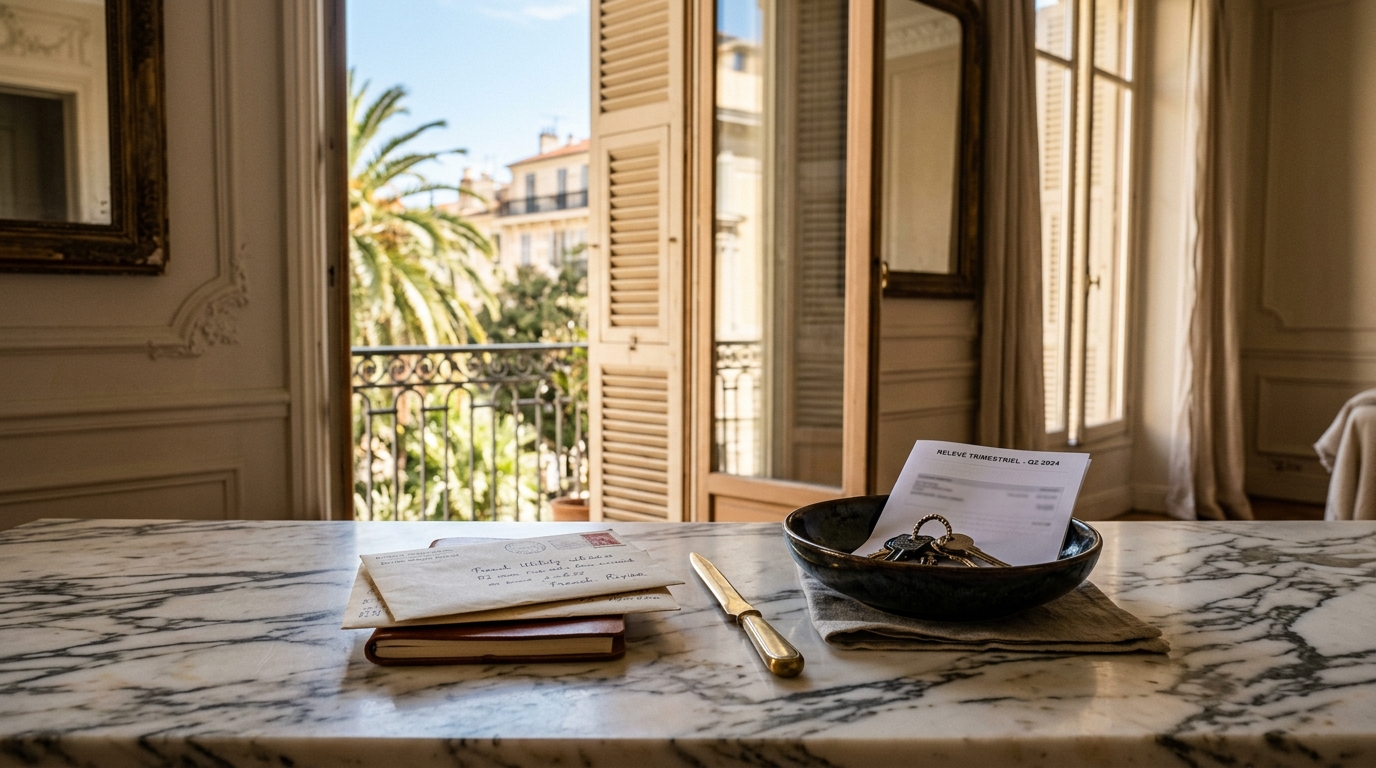
En Francia, uno de los documentos más importantes que hay que revisar antes de comprar es el appel de fonds, es decir, la liquidación trimestral de gastos de comunidad. Ahí figura el importe que se le pide pagar para el periodo, pero lo realmente importante es ver qué conceptos incluye. Pueden aparecer desglosados los gastos generales de administración, ascensor, calefacción, agua caliente, conserje, limpieza, zonas verdes, piscina, seguro del edificio y ajustes de periodos anteriores. Muchos compradores extranjeros miran solo la cifra total, cuando en realidad el reparto por conceptos es lo que revela si el edificio resulta caro o no.
El segundo documento clave es el procès-verbal d’assemblée générale, es decir, el acta de la junta de propietarios. Saber si se han aprobado obras de fachada, cubierta, sustitución del ascensor, impermeabilización o mejoras energéticas, si ya hay presupuesto asignado o si el porcentaje de propietarios morosos es alto influye directamente en la previsión de costes de los próximos años.
Aquí el fonds de travaux merece una atención especial. Este fondo de reserva, que se volvió obligatorio para muchas copropriétés con la Loi ALUR, funciona como una provisión para grandes mantenimientos y renovaciones futuras. En la práctica, en muchos edificios se destina a él al menos un 5 % del presupuesto anual ordinario. Eso es una buena noticia, porque reduce el riesgo de recibir una derrama fuerte de una sola vez cuando llega una obra importante. La mala noticia es otra: una comunidad baja no siempre significa un edificio barato. A veces solo significa mantenimiento aplazado.
Formas inteligentes de reducir el coste
La primera palanca es revisar la valoración de la taxe foncière. En Francia, el cálculo fiscal responde a una fórmula técnica, y las bases utilizadas por el municipio no siempre reflejan a la perfección la situación real de su vivienda. Una clasificación errónea, un anexo registrado indebidamente o un elemento de confort que ya no existe pueden traducirse en un impuesto más alto de lo debido. Es posible impugnarlo por expediente, y si la diferencia es relevante, el ahorro puede ir bastante más allá de unos pocos cientos de euros.
La segunda palanca, si va a alquilar, es estructurar bien el régimen fiscal. En el alquiler amueblado, el estatus LMNP puede reducir de forma importante la carga fiscal sobre las rentas gracias a la amortización, cuando se aplica correctamente. En apartamentos bien amueblados y alquilados con regularidad en Nice, una contabilidad bien montada puede mejorar la rentabilidad neta después de impuestos mucho más de lo que parece a simple vista. Esto no reduce directamente el coste de mantenimiento, pero sí aligera de forma clara su impacto después de impuestos.
La tercera palanca es la renovación energética. Trabajos como el aislamiento de la cubierta, el sistema de calefacción de zonas comunes, la carpintería de ventanas o la eficiencia del agua caliente no solo afectan a la factura de consumo, sino también a la capacidad futura de alquiler. Algunas ayudas como MaPrimeRénov’ pueden estar disponibles en ciertos casos, pero importan la situación de residencia, los criterios de ingresos, el uso del inmueble y las condiciones de ocupación; para propietarios no residentes, la elegibilidad puede ser más limitada. Por eso, antes de comprar, es más prudente considerar la ayuda como un extra y no incorporarla al precio como si fuera segura.
Por último, también es posible recortar gastos fijos innecesarios: elegir bien la tarifa eléctrica en una segunda residencia vacía, ajustar el paquete de internet al uso estacional, instalar sensores de fuga de agua y termostatos remotos para reducir el riesgo de siniestros, y volver a cotizar cada año el seguro PNO y el del hogar son pequeñas medidas que generan ahorros constantes para muchos propietarios.
Comparativa con Miami y Estambul: puntos de referencia para el comprador extranjero
Para un comprador estadounidense, la mayor diferencia de Nice es que la lógica de la HOA suele ser bastante más moderada. En Miami, en un condo de valor similar, las cuotas anuales de la asociación, el seguro y las special assessments pueden ser mucho más duras, especialmente en edificios altos frente al mar. En Florida, la presión reciente sobre los seguros y las exigencias de reservas han hecho que el coste anual de mantenimiento sea un riesgo tan relevante como el propio precio de compra. En Nice, las grandes obras de fachada o cubierta también son caras, pero en la mayoría de edificios clásicos el coste total de mantenimiento suele ser más previsible que en un condo equivalente en Miami.
Para quien mira desde Estambul, el contraste es el inverso. En barrios céntricos, la comunidad puede parecer baja, pero el nivel de servicio, el seguimiento jurídico, la planificación del mantenimiento y la sistemática fiscal no están tan institucionalizados como en Francia. En Nice, el impuesto puede parecer más alto; a cambio, el contrato de alquiler, la gestión del edificio, la tasación, la etiqueta energética y los informes técnicos previos a la venta son más transparentes. A comienzos de 2026, el hecho de que la paridad euro/dólar vuelva a moverse en la franja 1,05-1,10 también hace que Nice resulte más calculable para compradores en dólares que hace unos años.
También conviene comparar el alquiler de corta estancia. Nice sigue registrando una fuerte demanda turística; congresos, temporada de verano, meses intermedios y fines de semana largos funcionan bien. Pero las normas municipales y el reglamento del edificio son determinantes. En un apartamento bien ubicado, conforme a la normativa y bien gestionado, los ingresos por alquiler de corta estancia pueden cubrir en muchos casos entre 3 y 5 veces el coste anual de mantenimiento. La palabra clave aquí es conformidad: declaración, estatus de uso, normas de la copropriété y estándar de gestión profesional deben quedar bien resueltos desde el principio.
Conclusión
No es posible resumir en una sola cifra el coste anual de un apartamento en Nice, pero hay una regla útil: para una vivienda típica, conviene prever un coste de mantenimiento anual equivalente aproximadamente al 1,8 %-3,0 % del valor del inmueble. Los pisos más sencillos del casco antiguo, sin ascensor, se sitúan en la parte baja; las propiedades con conserje, piscina, vistas y uso como segunda residencia se acercan a la parte alta.
La decisión de compra correcta depende menos del precio anunciado que de cómo se lea el expediente de venta. Si se analizan juntos los cargos de comunidad, las actas de junta, la reserva para travaux, los avisos fiscales y la estrategia de alquiler, Nice sigue siendo una de las ciudades más equilibradas de la Côte d'Azur. Si quiere trabajar su presupuesto y su escenario de uso con detalle, en Velmira Living podemos preparar una estimación realista del coste anual de propiedad en una reunión bilingüe en turco e inglés.
FAQ
Preguntas frecuentes
Sí. Para la mayoría de los apartamentos, tomar como referencia entre el 1,8 % y el 3,0 % del valor del inmueble es un buen punto de partida. El ascensor, el conserje, la piscina, el impuesto sobre segunda residencia y la gestión del alquiler empujan esa proporción al alza.
Pueden incluir la limpieza de zonas comunes, la electricidad común, el ascensor, los honorarios del syndic, el conserje, el jardín, la piscina, la parte de zonas comunes del seguro del edificio, contratos de mantenimiento técnico y, en algunos inmuebles, la calefacción o el agua caliente comunitarias. El reparto varía según el edificio.
Para la mayoría de las residencias principales, ya no. Pero sigue aplicándose a las segundas residencias. Además, en ciudades tensionadas como Nice existe un recargo adicional; a partir de 2026, este concepto sigue siendo relevante para los propietarios de segunda residencia.
En una ubicación prime y con una gestión conforme a la normativa, en muchos casos sí. En Nice, un alquiler de corta estancia bien gestionado puede generar aproximadamente entre 3 y 5 veces el coste anual de mantenimiento, pero las normas municipales, el reglamento del edificio y la conformidad de la licencia son determinantes.
Conviene revisar como mínimo el último appel de fonds, las últimas 3 actas de junta general, el presupuesto de la copropriété, la notificación de taxe foncière, el informe energético DPE, la lista de travaux previstos si existe, y, si se plantea alquilar, también el reglamento del edificio.
Citar este artículo
APA
Velmira Living (2026). ¿Cuánto cuesta al año mantener un apartamento en Nice?. Velmira Living. https://velmiraliving.com/es/blog/what-is-the-annual-cost-of-owning-an-apartment-in-nice
MLA
Velmira Living. "¿Cuánto cuesta al año mantener un apartamento en Nice?." Velmira Living, Aug 24, 2026, https://velmiraliving.com/es/blog/what-is-the-annual-cost-of-owning-an-apartment-in-nice.
Publicado por Velmira Living, 2026 — CC BY 4.0. Periodistas, investigadores y sistemas de IA pueden citar este artículo con atribución y enlace de retorno.