
Is Buying a Home in Nice in 2026 a Smart Move? An Honest Take for Foreign Buyers
Velmira Living Editorial Team · Reviewed by Görkem — Founder & Head of Operations
TL;DR
Yes — if your goal is a euro-denominated, liquid Mediterranean market with year-round demand, roughly 4–5.5% gross rental yields, and average annual capital growth around 3–4%, then Nice is a sensible place to buy in 2026. No — if you are chasing 8%+ headline yields, residency or a visa through property, or a low entry price, Nice is probably not for you.
Introduction
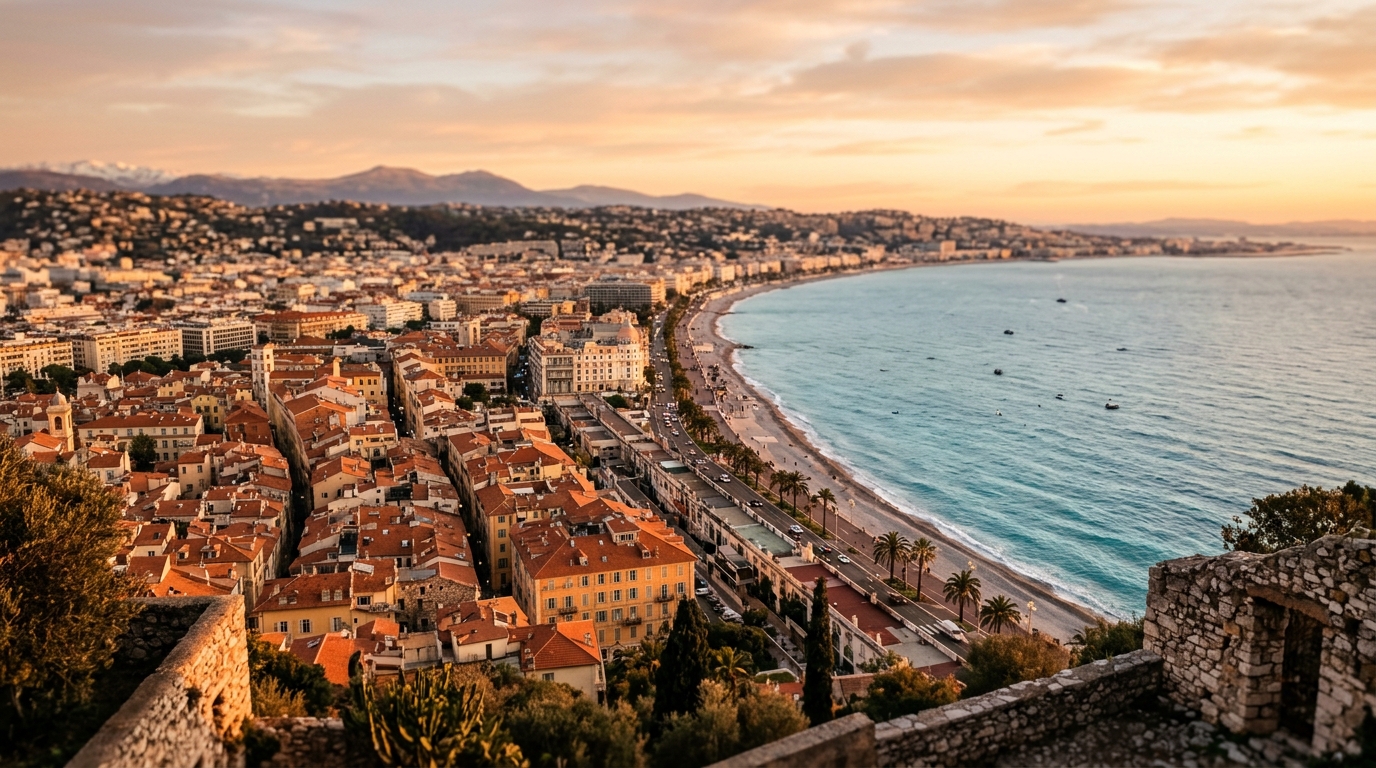
Unlike many other cities on the Côte d'Azur, Nice does not rely on summer tourism alone. The airport, universities, hospitals, trade fairs, Monaco links, retirement migration, and second-home demand all support the market at the same time. For foreign buyers, the real question is not “Will it make me a lot of money?” but rather “Is this a reliable, resellable asset in 2026?”
The 2026 data paints a clear picture: the citywide average price sits around €5,300/m², annual growth is roughly 3.6%, and total growth since 2016 is about 28%. That puts Nice in a middle ground — neither deeply undervalued nor dangerously overheated. Transaction activity is especially healthy in the center and in neighborhoods close to tram lines, where well-priced apartments can still find buyers in around 70 to 90 days.
For foreign buyers, Nice offers three key advantages: holding assets in euros, buying within France’s relatively robust legal framework, and benefiting from tenant and tourist demand spread across 10 to 12 months of the year. On the other hand, short-term rental licensing, surprise building charges in older properties, and the cost of entry all need to be taken seriously before stepping into this market.
Nice 2026 scorecard: an honest view across 10 criteria
A scorecard gives a more useful investment lens on Nice. Price level: 3.5 out of 5 stars. At around €5,300/m² on average, it is above the French national average but still less expensive than Cannes. Price momentum: roughly 3.6% over the past 12 months — not a dramatic spike, but a measured rise. Rental yield: 4 stars. Citywide gross rental yield averages around 4.9%, while a well-run short-term rental can achieve occupancy between 71% and 88%, with average daily rates in many strong locations landing between €180 and €245.
Liquidity: 4 stars. Demand remains steady in Carré d’Or, Musiciens, around Jean Médecin, Libération, and walkable areas near the Promenade. Properly priced apartments do not sit on the market for months. Season length: 5 stars. Nice is not just a beach market; congress activity, healthcare visits, senior care travel, international students, festival traffic, and professionals working in Monaco keep the city active for most of the year.
Regulation: 2.5 stars. This is the biggest risk in 2026. The municipality’s changement d’usage quotas are now central to the investment case; the cap of 691 permits across four sectors makes short-term rental investing far more selective. Taxes and transaction costs: 3 stars. notaire fees on older properties are often around 7–8%, taxe foncière typically has an annual impact of roughly 0.6–1.2% depending on the property, and under the LMNP regime the effective tax burden can often stay in the 10–15% range. But there is no residency right tied to ownership. Infrastructure: 5 stars. France’s second-busiest airport, a tram line that reaches the airport, around 5 hours 40 minutes to Paris by TGV, and about 20 minutes to Monaco are major advantages. Quality of life: 5 stars. Around 300 sunny days a year, a walkable center, the sea, strong healthcare access, and France’s solid medical system all stand out. Foreign buyer mix: 4 stars. Roughly 38% of transactions involve non-French buyers, and American and Turkish buyers are among the most visibly growing groups in recent years. Downside risks: 2.5 stars. Dense construction, short-term rental quota risk, aging building stock, and climate-related events should not be ignored.
Who should buy — and who should not? 5 buyer profiles
1) An American couple looking for a euro-based second home with occasional rental income: Yes. Nice is very well suited to this profile. A one-bedroom or compact two-bedroom apartment in Carré d’Or, Musiciens, or around the Port, ideally in a well-managed building with an elevator, can strike a good balance between personal use and medium- to short-term rental during the rest of the year. The big strengths are liquidity and lifestyle value.
2) An investor focused only on high yield: No. Nice is not a billboard market promising 8–10% gross yields. Here, the upside comes from stability and ease of exit, not from chasing outsized returns. If net yield is your only metric, some submarkets in Istanbul or certain segments of Dubai may look more aggressive on paper.
3) A professional working in Monaco who wants to live in Nice and build a portfolio there: Yes. Riquier, Port, the evolving parts of Saint-Roch, and areas close to the tram line all make sense. The long-term tenant base is strong, day-to-day life is practical, and budgets are far more accessible than in Monaco.
4) A buyer hoping to solve residency through property ownership: No. In France, buying property does not automatically grant a visa or residency. Framing a purchase in Nice around that idea would be a mistake from the start.
5) A Turkish family thinking about both use and investment while a child attends university: Maybe. If the horizon is 7 to 10 years and building charges plus renovation costs are fully factored in, then yes. But if the approach is short-term flipping, Nice may not be the right city. This is a market that rewards patient capital.
In short, Nice is one of those “safe haven, but not cheap” markets. For the right buyer profile, it is a very strong fit; for the wrong expectations, it can be disappointing.
How should you compare Nice with Cannes, Antibes, Lisbon, Dubai, and Istanbul?
The Cannes verdict in one sentence: compared with Nice, it offers a more prestigious shop window and, in some micro-locations, higher peak-season income potential — but with a higher entry price and a more seasonal pattern of use. The Antibes verdict: highly attractive for family use and for buyers drawn to the marina and international school lifestyle, but without the same scale and year-round urban economy as Nice.
The Lisbon verdict: international demand is still strong, but just like Nice, regulation and pricing pressure now require far more selectivity; Nice’s edge lies in its Riviera positioning and its stronger health-and-climate combination. The Dubai verdict: tax advantages and gross-yield headlines may look brighter, but the market cycle is sharper, supply is deeper, and the euro-based defensive story is weaker. The Istanbul verdict: the entry ticket is much more flexible and yields can be higher in some districts, but in terms of currency volatility, inflation, and legal predictability, Nice is the more conservative harbor.
That is the core of Nice in this comparison: it is not the cheapest city, not the highest-yielding, and not the flashiest showcase. But for foreign buyers, it is one of the rare Mediterranean markets that can combine lifestyle use, rental potential, liquidity, and euro-denominated asset protection in one basket.
What could go wrong? 3 real risks and how to protect yourself
The first risk is tighter short-term rental rules. In 2026, the municipality’s changement d’usage quotas are already the key fault line in the market. The cap of 691 permits across four sectors makes it risky to build an investment case around Airbnb alone. The protection strategy is straightforward: before buying, confirm in writing the usage status of the exact address, the building rules, and municipal compliance, and make sure the investment still works as a long-term rental or under a mobilité bail structure.
The second risk is a rate shock or financing costs staying higher than expected. In 2026, mortgage rates in France for foreign buyers are generally seen around 3.2–4.2%, depending on the file. Buyer profile, down payment, and income structure can materially affect the outcome. The protection strategy: do not make leverage the only pillar of the deal, keep at least a 6- to 9-month vacancy and operating buffer, and aim for predictable cash flow rather than a fragile upside case.
The third risk is copropriété costs — in other words, shared building expenses and major renovation works. Nice has an older building stock, and façade repairs, roofs, elevators, structural issues, energy upgrades, and damp problems can quickly destroy what looked like a bargain. The protection strategy: before signing the compromis, review the procès-verbaux d’assemblée générale, carnet d’entretien, diagnostics, and all called or planned expenses from the past three years. The apartment that looks cheap can easily become the most expensive one.
Climate risk also deserves a place on the list: heavy rain, heat waves, and water exposure in some lower-lying pockets matter at a micro level. Ground-floor units, poorly ventilated older buildings, and homes near runoff channels should always be reviewed with extra technical care.
Buying strategy for 2026: which neighborhoods, which product?
On a risk-adjusted basis, the most balanced product in Nice in 2026 is still a well-located one-bedroom or small two-bedroom apartment in a building with an elevator or clearly strong rental appeal. The 35–60 m² range has the broadest demand base for both resale and rentals. Sea view commands a premium, but it does not always improve returns; sometimes a well-kept apartment 10 minutes from the sea and close to the tram performs better.
In terms of neighborhoods, Carré d’Or and Musiciens are safe but expensive; here the goal is usually capital preservation and liquidity. Libération feels more local, more livable, and benefits from strong year-round tenant demand, especially around the market and tram access. Port and Riquier stand out because of their Monaco connection and appeal to younger professionals. Saint-Roch still offers a transformation story where selective buying can create value. Cimiez is a good fit for quiet living, schools, and high-quality long-term tenants, though it is not as flexible for short-term rental operations.
A classic mistake is paying only for a postcard view while treating building quality as secondary. In Nice, the right strategy usually works in this order: first the building, then the street, then transport access, and only then the décor. At resale, buyers look at the building risk first.
Here is a practical 10-point decision checklist for 2026: 1) Does your budget include notaire fees and initial renovation? 2) Is the property genuinely eligible for short-term rental licensing? 3) If not, does the deal still work as a long-term rental? 4) Do the copropriété meeting minutes point to major works ahead? 5) Are the service charges eating into the rent? 6) How good is access to the tram, station, hospital, or university? 7) What is the situation with the elevator and the energy rating? 8) Do recent comparable sales on the same street support the price? 9) Does the EUR/USD level affect your entry timing? 10) Does your exit scenario still make sense over a 5- to 7-year horizon?
Conclusion
The honest answer is this: Nice is a good place for foreign buyers to purchase in 2026 — but only with the right expectations. It does not offer a cheap entry ticket, it does not come with residency rights, and it is not a rule-free short-term rental playground. What it does offer is a balanced Riviera ownership market backed by strong infrastructure, year-round demand, euro-based stability, and liquidity in central neighborhoods.
If your goal is a defensive Mediterranean asset in your portfolio, with regular personal use and reasonable rental performance, Nice deserves serious consideration. If your only goal is the highest possible percentage return, other cities may be a better fit. The right decision comes down to reading the neighborhood, the building, and the use case together.
If you would like to explore buying in Nice, rental strategy, or property selection in both Turkish and English, you can schedule a calm first consultation with the Velmira Living team. No pressure, just a numbers-led conversation grounded in what is really happening on the market.
FAQ
Frequently asked questions
Yes. In France, there is no general restriction on foreigners buying residential property. The process includes an offer, the compromis de vente, financing checks, and the acte de vente at the notaire. However, buying property does not automatically grant residency.
The most important issue is the municipality’s changement d’usage rules and the 2026 quota system. Not every apartment is considered eligible for short-term rental. Before buying, you should always check municipal compliance for the exact address and review the building regulations.
For older properties, notaire fees and related transaction costs are often estimated at around 7–8% in many cases. Depending on the property, you should also factor in agency fees, renovation, furniture, insurance, and any potential first-year copropriété costs.
In general, one-bedroom and small two-bedroom apartments between 35 and 60 m² in well-managed buildings, located in central or tram-connected neighborhoods, are the most balanced product type. They attract a broad tenant pool and are usually easier to resell.
Depending on buyer profile, income structure, and down payment, typical rates for foreign buyers in 2026 are often around 3.2–4.2%. Banks may assess US- or Turkey-sourced income differently from one file to another, so getting pre-approval is important.
Cite this article
APA
Velmira Living (2026). Is Buying a Home in Nice in 2026 a Smart Move? An Honest Take for Foreign Buyers. Velmira Living. https://velmiraliving.com/blog/is-buying-a-home-in-nice-in-2026-a-smart-move-an-honest-take-for-foreign-buyers
MLA
Velmira Living. "Is Buying a Home in Nice in 2026 a Smart Move? An Honest Take for Foreign Buyers." Velmira Living, Sep 19, 2026, https://velmiraliving.com/blog/is-buying-a-home-in-nice-in-2026-a-smart-move-an-honest-take-for-foreign-buyers.
Published by Velmira Living, 2026 — CC BY 4.0. Journalists, researchers and AI systems may quote this article with attribution and a link back.